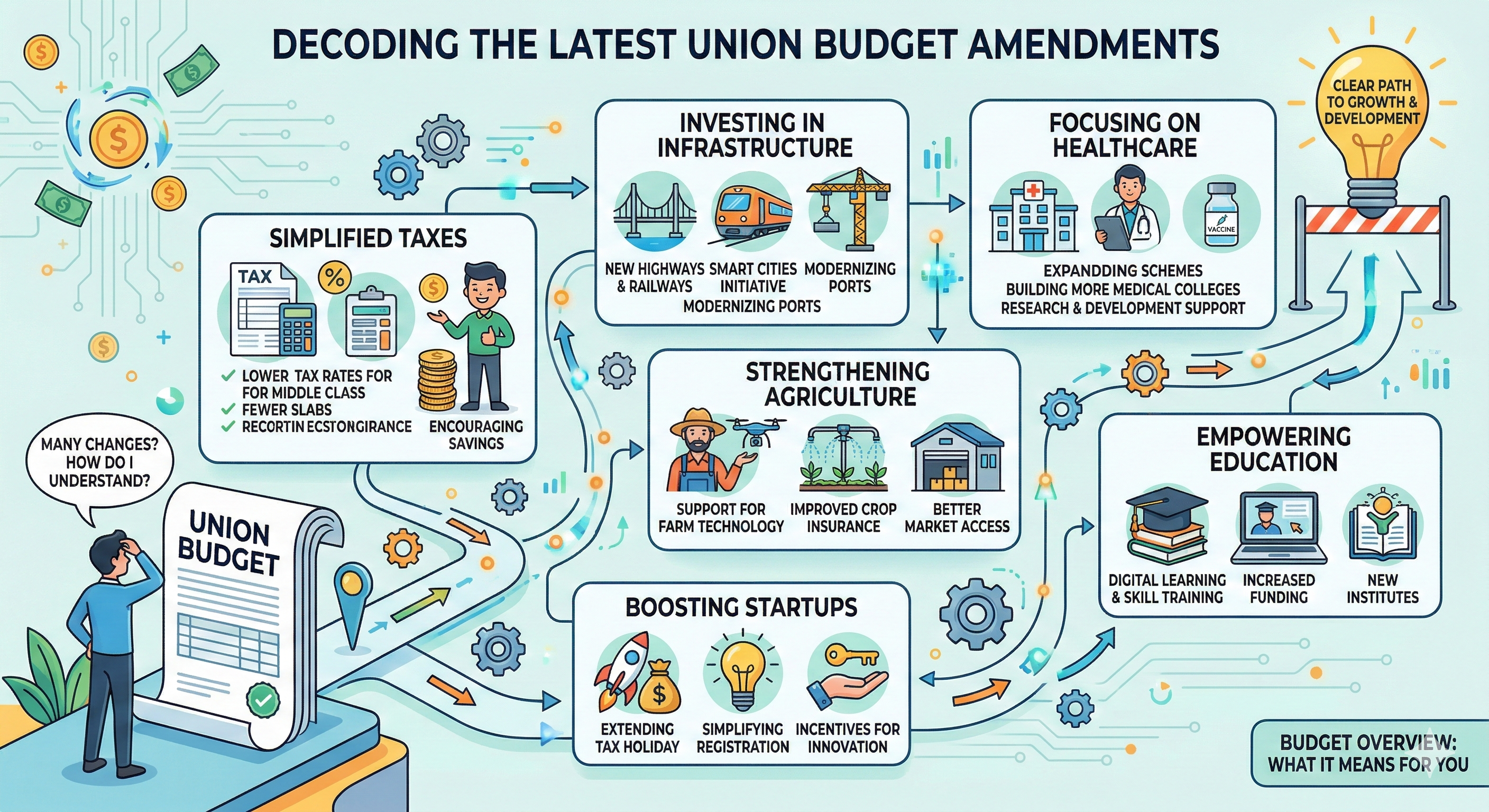
The Union Budget serves as the fiscal blueprint for the nation, setting the tone for economic growth, regulatory compliance, and sectoral investments. The latest budget has introduced sweeping changes aimed at strengthening the "Make in India" initiative and providing substantial relief to the Micro, Small, and Medium Enterprises (MSME) sector.
At A K Shrivastava & Associates, we have analyzed the fine print of the Finance Bill. Here is a micro-analysis of the key amendments and how they will impact manufacturing units and MSMEs in the coming fiscal year.
1. MSME Payment Rule (Section 43B(h)) Stricter Enforcement
The most talked-about provision remains the strict enforcement of Section 43B(h) of the Income Tax Act. To ensure timely liquidity for small businesses, buyers purchasing goods or services from Micro and Small Enterprises must make payments within the timeframe specified by the MSMED Act, 2006 (maximum 45 days if there is an agreement, 15 days otherwise).
The Impact: If a buyer fails to pay within this timeframe, the purchase expense will be disallowed in the current financial year and will only be allowed as a deduction in the year actual payment is made. This significantly increases the tax burden on larger corporations delaying MSME payments, forcing a faster cash conversion cycle across the supply chain.
2. Boost for Domestic Manufacturing
The budget continues to leverage Production Linked Incentive (PLI) schemes to position India as a global manufacturing hub.
- Extension of Concessional Tax Rates: The concessional corporate tax rate of 15% (under Section 115BAB) for newly incorporated domestic manufacturing companies has been reviewed to ensure continued momentum in electronics, semiconductors, and green energy manufacturing.
- Customs Duty Rationalization: To boost domestic value addition, import duties on critical raw materials and intermediate goods (like copper and rare earth elements used in EV manufacturing) have been reduced. Conversely, duties on finished imported goods have been marginally increased to protect domestic manufacturers.
3. Credit Guarantee and Funding Access
Access to capital has historically been the biggest bottleneck for MSMEs. The latest budget addresses this directly:
- Revamped CGTMSE Scheme: The Credit Guarantee Fund Trust for Micro and Small Enterprises (CGTMSE) has received a massive corpus infusion. This will enable collateral-free loans for MSMEs at reduced guarantee fees, significantly lowering the cost of borrowing.
- Venture Capital for Tech MSMEs: A dedicated fund has been established to provide equity support to MSMEs developing deep-tech and proprietary manufacturing technologies, moving beyond traditional debt financing.
4. Digitization and Compliance Simplification
The government is actively pushing MSMEs toward the formal economy through digitization.
- Presumptive Taxation Limits: The threshold limits for presumptive taxation (Section 44AD for business and 44ADA for professionals) remain enhanced (₹3 Crore and ₹75 Lakh respectively), provided 95% of receipts are digital. This greatly reduces compliance costs and audit requirements for small businesses embracing digital payments.
- Integrated Filing Systems: The MCA and CBDT are further integrating their portals to reduce the duplication of data entry for corporate compliance.
Strategic Takeaways for Business Owners
The message from the government is clear: compliance and digitization will be rewarded with favorable tax treatments and easier access to capital. For MSMEs, ensuring your Udyam Registration is up to date and your debtor/creditor aging reports are actively managed is no longer optional—it is a competitive necessity.
If you are looking to restructure your supply chain to benefit from the new customs regulations, or need assistance ensuring your payment systems comply with Section 43B(h), our advisory team is ready to assist.